Partners
At present, the Scalasca project is a collaboration between the following organizations.
Forschungszentrum Jülich GmbH
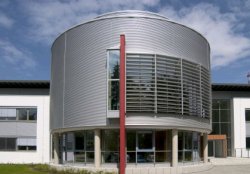 Forschungszentrum Jülich is one of the largest interdisciplinary research centres in Europe and a founding member of the Helmholtz Association. Researchers from all over the world contribute their expertise here in the major future fields of energy, information and bioeconomy. In these socially highly relevant areas, Forschungszentrum Jülich is looking for solutions to the challenges of the modern world.
The Jülich Supercomputing Centre (JSC), where the Scalasca project was started, is an institute at Forschungszentrum Jülich. It operates one of the most powerful super- and quantum computer infrastructures in Europe and hosts the first European Exascale supercomputer JUPITER. In funded projects and cooperations, the JSC drives developments towards modular exascale and pre-zettascale systems and tackles the challenges associated with scaling up applications for next-gen supercomputers. Among many other domain-specific and cross-domain research areas, JSC researchers focus in the realm of computer science on modular supercomputing, cluster computing, performance analysis of applications, visualization, computational steering, federated infrastructures and artificial intelligence.
Links
RWTH Aachen University
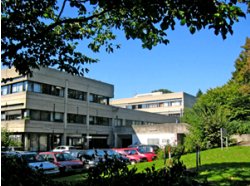 RWTH Aachen University is one of Europe’s leading institutions for engineering and technology, with a strong reputation in research and education. Founded in 1870, RWTH Aachen is part of the German Universities Excellence Initiative and consistently ranks among the top technical universities in Germany and worldwide. The university fosters close collaborations with industry and research institutions, driving innovation in fields such as mechanical engineering, computer science, materials science, and energy technology.
The IT Center (ITC) at RWTH Aachen plays a pivotal role in the university’s research and education ecosystem. It provides cutting-edge computing infrastructure, high-performance computing (HPC) resources, and advanced IT services to support academic and scientific endeavors. The ITC also promotes interdisciplinary research by offering expertise in areas like data analytics, artificial intelligence, and parallel computing. Additionally, it collaborates with national and international supercomputing centers to advance computational science and engineering.
The HPC group at RWTH Aachen, part of the IT Center, specializes in high-performance computing and parallel algorithms. It focuses on optimizing scientific applications for modern HPC systems, developing scalable algorithms, and providing tools for performance analysis and debugging. The group actively contributes to national and European HPC initiatives.
Links
Technical University of Darmstadt
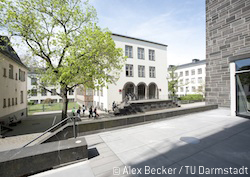 Since its foundation in 1877, the Technical University of Darmstadt (TU Darmstadt) has addressed the urgent issues of the future with pioneering achievements in research and teaching. Together with Goethe University Frankfurt and Johannes Gutenberg University Mainz, it forms the Rhine-Main Universities (RMU) alliance. TU Darmstadt has a long tradition in computer science: the first programming lectures were held in Darmstadt as early as 1957, and the Department of Computer Science, one of the first in Germany, was founded in 1972. The department is consistently ranked among the top institutions in national rankings. The department’s High-Performance Computing Lab develops methods, tools, and algorithms to support the development and deployment of HPC applications across their entire life cycle, from design and optimization to scaling and tuning.
Links